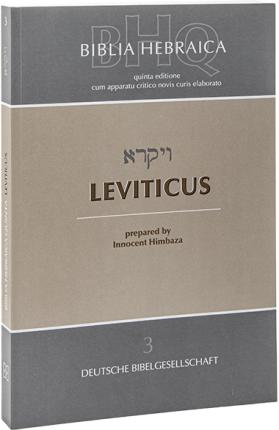
At present, the main edition of the Hebrew text that serves as the basis for study and modern translations is Biblia Hebraica Stuttgartensia, BHS. Because Stuttgartensia is the fourth critical edition, the new edition bears the Latin name “quinta”, i.e. the fifth; Biblia Hebraica Quinta, BHQ.
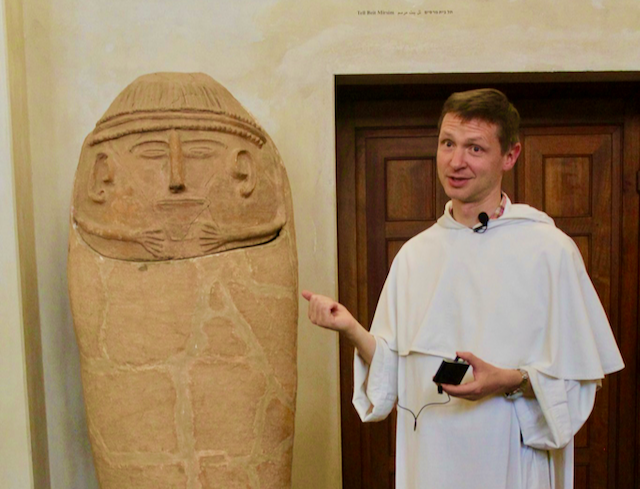
For the last two years, the director of the éditorial committee of the Bible in Its Traditions, fr. Łukasz Popko, has been working on Second Kings in the BHQ. He took over this work after S. Carmel McCarthy passed away last year. Since the BHQ team has been working for decades, it was essential for the project’s coherence that he utilize its methodology and editorial praxis. The covid pandemic forced numerous scholarly projects to become more what The Bible in its Traditions has always been: an online workshop. Fr. Łukasz has been participating in the weekly virtual sessions of larger and smaller teams working on similar texts. For Second Kings, Adrian Schenker OP (Fribourg University, Switzerland) was the chief editor for years, and Stephen Ryan OP (Dominican House of Studies) who was charged with the publication of First Kings [see the photo].
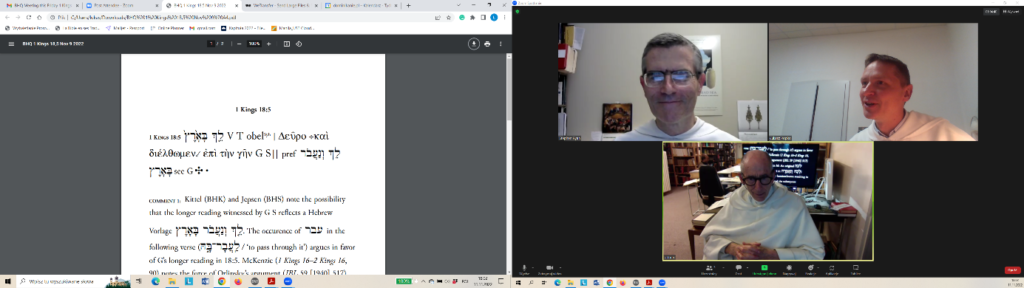
The three scholars discuss the cases that they find difficult or interesting and share resources. The isolated toil of those laboring at the library receive thus not only more objectivity and early criticism but also friendly support. Once a year the BHQ team meets in Stuttgart thanks to the sponsorship of the publisher, Deutsche Biebelgesellschaft. It is an occasion to report the progress of works, scholarly engagement, editorial decisions, and last but not least, friendly encounters. The project is also present in the broad academic world; e.g. this year at the 24th Congress of the International Organization for the Study of the Old Testament, Zurich 8-12 August.
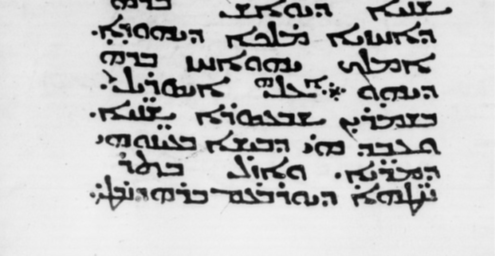
2 Kings, as well as the whole composition of Samuel-Kings, has particular textual complexity. Of particular importance are the ancient versions: the Old Greek, Syrohexapla [see below, gallica.bnf.fr], and Old Latin translations, which, at places, differ significantly from the Masoretic text.