Michel Petrossian, a composer in great demand throughout the world, kindly invited us to talk about his links with our research programme, on the occasion of a portrait devoted to him by *Le monde de la Bible*.
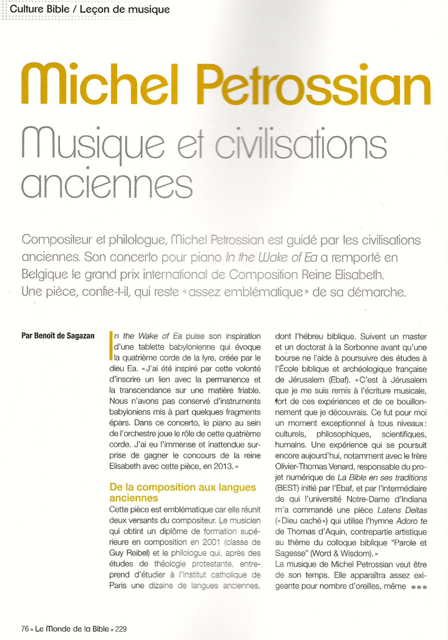


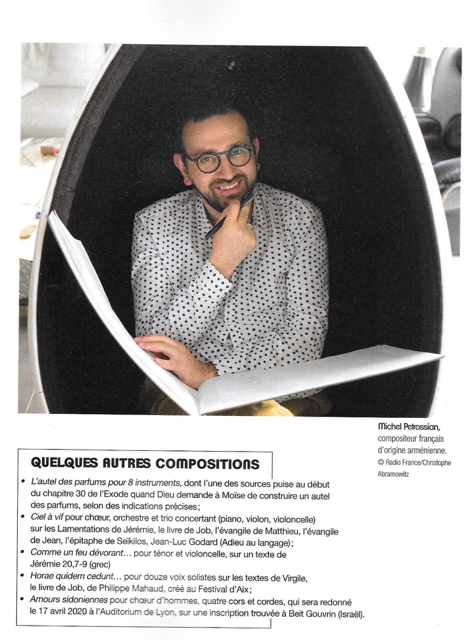
Michel Petrossian, a composer in great demand throughout the world, kindly invited us to talk about his links with our research programme, on the occasion of a portrait devoted to him by *Le monde de la Bible*.

_
Our scroll presents the best results of our research in an innovative interface.
In this Beta version, It offers new translations of the main versions of the Scriptures, accompanied by rich multimedia content.

_
This internet platform is a comprehensive tool for researching, studying and reading the Bible.

_
Bibleart mobile application will offer a new French translation of the entire Bible enriched with thousands of multimedia contents, resulting from the work of our specialists.

Our Friends and Collaborators’ New Publications
3 January 2023
New presentations of our programme
31 July 2020
Charles Enderlin presents the École and The Bible in Its Traditions on France 2, a national television channel
13 June 2013